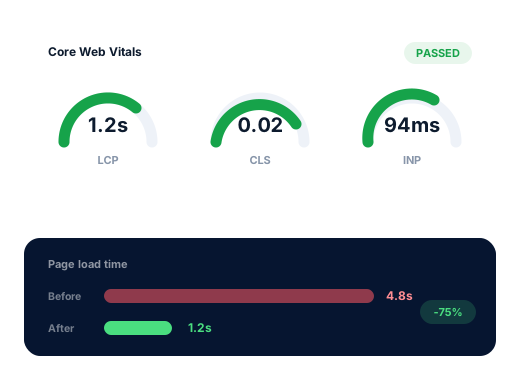
Largest Contentful Paint (LCP)
LoadingTime until the largest thing in view, typically a hero photo or a heading, finishes rendering. Under 2.5 seconds counts as good. Heavy images and a slow-responding server explain most misses.

Speed Optimization
Faster pages for Burlington businesses whose customers search on phones: on the GO train, in a plaza parking lot, or by the waterfront on a busy weekend.
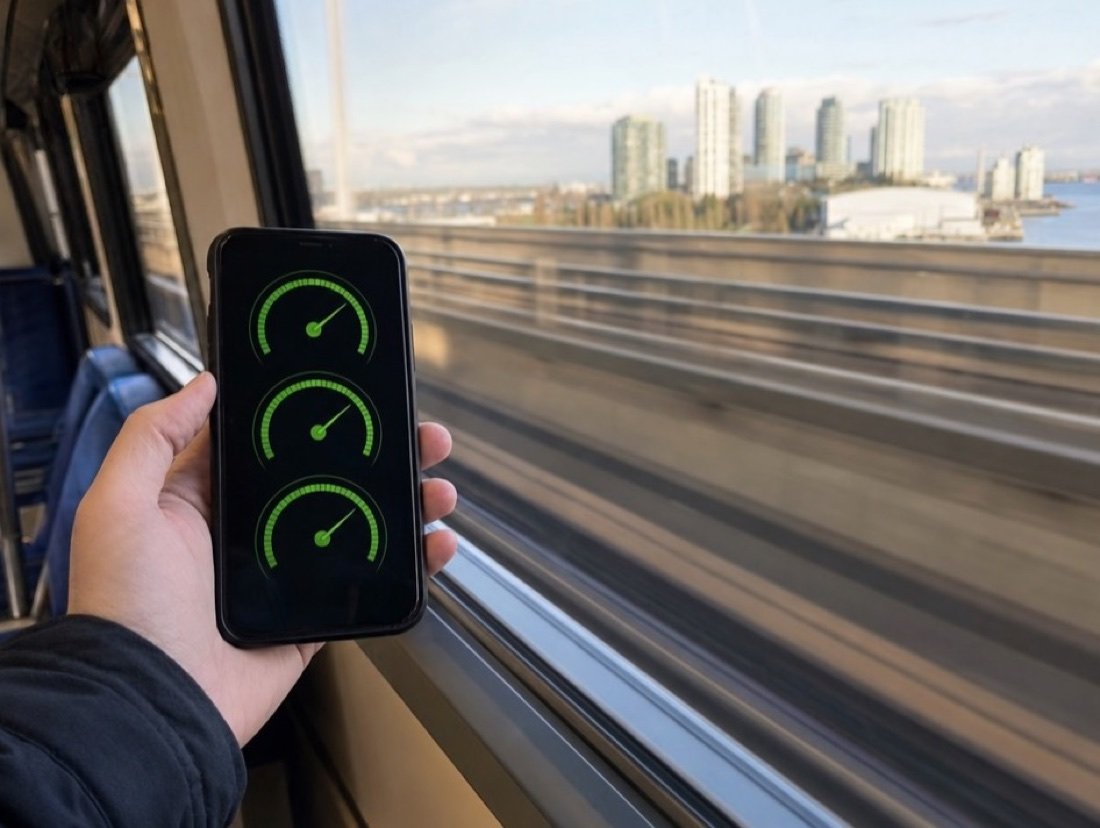
In Burlington, Ontario a large share of local searching happens away from a desk. Commuters ride the lakeshore line through the Appleby, Burlington and Aldershot GO stations and look things up on the way; someone in a parking lot types “burlington restaurants open now”; festival crowds downtown check where to head next. Mobile connections on the move can be patchy, so a page that feels fine on office Wi-Fi turns into a real obstacle on a phone.
Slow pages cost more than rankings. People leave before the call button appears, before the menu loads, or before the booking calendar has finished drawing. Property listings packed with lakeshore photos, wedding venue galleries, restaurant menus posted as PDFs and clinic sites carrying several booking and chat widgets are the usual culprits here.
Speed work begins with an audit of your actual pages, measured the way Google measures them, and is then quoted once as a project. Holding on to the gains afterwards, through careful updates and checks, falls under the routine upkeep in your monthly plan.
Search demand
Google.ca suggestions from October 2026. These are typed on phones, often in a hurry, and a slow page loses them.
Every search above is after one thing, fast: a number, an address, a menu or a booking slot. We make sure that first screen arrives quickly, with the call button and key facts in view, and let galleries, maps and widgets load as the visitor scrolls or taps. The photos stay; they simply stop blocking the page.
Usual suspects
Expect a slow site to have more than one of these going on.
Listing photos, venue galleries and project shots uploaded at several megabytes apiece and shown at a fraction of that size. Resizing and converting them to modern formats often strips out most of the page weight.
A phone has to download the whole file before showing anything, and search engines read PDF text less reliably than an ordinary page. A plain HTML menu loads faster and is easier for Google to understand.
Chat bubbles, review carousels, social feeds, booking scripts and several analytics tags, each pulling in code of its own. Many were added years ago and no longer earn their place.
Heavy visual builders load large amounts of code on every page, whether it is used or not. Trimming or replacing them is often the single biggest gain.
If the server takes its time to respond, everything else waits behind it. Caching helps; sometimes the only real cure is a move to a better host.
What Google measures
Google gathers these numbers from real visits in Chrome over the previous 28 days and grades the 75th percentile, roughly the slower end of a typical visit. Meet all three targets and the page is rated good.
Time until the largest thing in view, typically a hero photo or a heading, finishes rendering. Under 2.5 seconds counts as good. Heavy images and a slow-responding server explain most misses.
How quickly the page reacts when someone taps a button, opens a menu or types into a form. Good is 200 milliseconds or less. Heavy scripts from widgets and trackers are the most common drag.
How much the page jumps about while loading, such as a button sliding away just as a thumb reaches for it. Good is a score of 0.1 or lower. Images without set dimensions and late-arriving banners cause most of it.
The work
Field data from Google, lab tests on a mid-range phone and a list of the heaviest items on each important page, so effort goes where it counts.
Every image is cut to the size its slot needs, squeezed, sent as WebP or AVIF where the browser copes, and fetched only as a reader nears it on the page.
Unused plugins removed, widgets delayed until someone needs them, and tracking tags consolidated without losing the data you rely on.
Page caching, browser caching and a content delivery network where it helps, set up for how your site actually works.
Fixed dimensions for images and embeds, reserved space for banners, and fonts that load without shoving the text around.
Results checked in lab tests straight away and in Google’s field data once enough new visits have been recorded.
Done carefully
The standards we hold ourselves to on every account, set out in writing.
A faster site will not outrank a much better page on its own. It does stop you losing the visitors you have already earned.
Speed is one of many signals Google uses, and it rarely decides a ranking by itself. What it reliably changes is how many people stay long enough to call, book or buy. We quote the work once, in CAD, after an audit, and we tell you if a slow host or theme is the real problem before you spend money anywhere else.
Ask us about your business
How we work
It begins with a close look at your listing and website and settles into a short monthly report you can read over coffee.
We read your website and listing closely, then check what a searcher sees from Aldershot, Downtown, Millcroft and Burloak.
We agree with you which searches are worth winning, then decide whether each needs a new page or a profile edit.
Profile, pages, content and directory clean-up, beginning with whatever is likely to pay off soonest.
Each month you receive the calls, form messages and positions we tracked, along with the plan for the next one.
Questions
Run your home page through PageSpeed Insights and read the mobile results from real users at the top of the report. Then open the site on your own phone over mobile data, not office Wi-Fi, and time how long it takes before you could tap the call button.
Sometimes slightly, especially where competing pages are otherwise similar. The more dependable benefit is that fewer visitors give up before contacting you.
No. Buyers want photos, especially of waterfront and lakeshore properties. They need to be sized correctly, compressed and loaded as the visitor scrolls, with full galleries opening on request. Handled that way, photo-heavy pages can still load quickly.
On phones, often yes. The whole file has to download before anything shows, and it is awkward to read on a small screen. A simple web page version loads faster, is easier to update and gives Google text it can read.
On a typical small site the hands-on work takes a week or two. Google’s real-visitor data, though, is a rolling 28-day window, so its reports catch up roughly four weeks after the changes are live.
Because no two slow sites share the same causes, we audit first and then quote the work once, in CAD. Afterwards, protecting the gains is ordinary upkeep, already part of Starter ($300), Growth ($500) and Pro ($700) each month.
Further reading
More reading on this topic for people running a business in Burlington.
Any service can be taken on its own; many clients begin with just one.
Every trade is searched its own way here, so each industry page rests on separate research.
A free review shows how visible you are between Aldershot and Burloak, who outranks you, and which changes to make before anything else.
Request my free audit